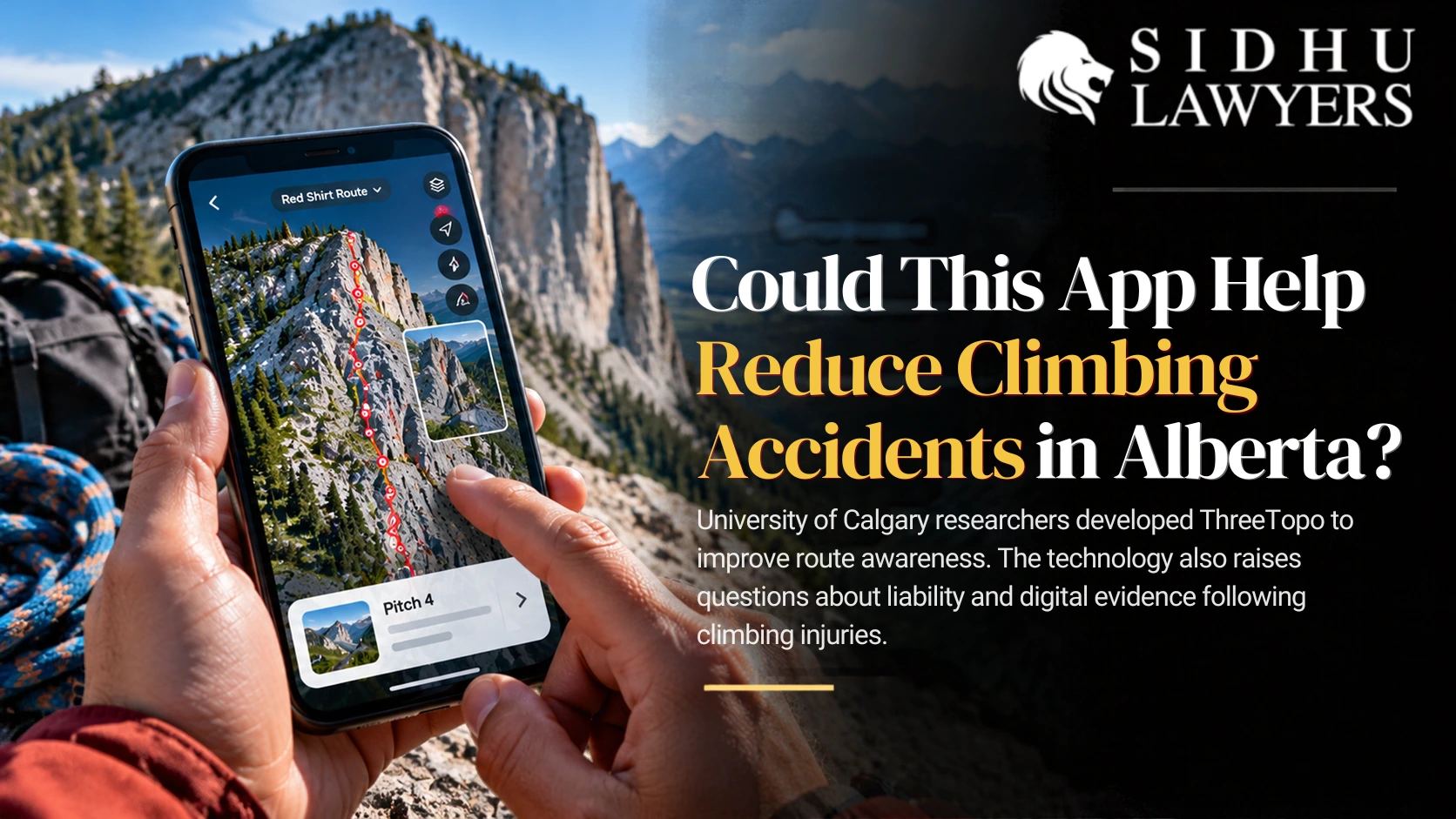
Technology can reduce some preventable risks in outdoor climbing by helping people stay on route, recognize hazards, and make better decisions before a mistake becomes a serious injury. The new ThreeTopo climbing app offers an interesting look at how digital tools can support safety in high-risk recreation. It doesn’t replace training, equipment or good judgment, but it may give climbers another practical source of information when conditions get difficult.
How ThreeTopo Uses Technology to Help Climbers
Ben Pearman, a University of Calgary computer science master’s student and climber, developed ThreeTopo with Kurtis Danyluk and Wesley Willett. The team presented the research at the 2026 CHI Conference on Human Factors in Computing Systems. The University of Calgary lists the project as a CHI 2026 Best Paper.
The app focuses on a specific problem in multi-pitch climbing: route finding.
Pearman created a three-dimensional model of the Red Shirt route on Mount Yamnuska using drone photography. The route rises about 240 metres and forms part of Yamnuska’s south face in Alberta’s Bow Valley. Instead of relying solely on written descriptions or hand-drawn climbing topos, ThreeTopo gives climbers a detailed visual model of the cliff.
The system combines:
→ High-fidelity terrain models that represent the actual cliff surface.
→ Spatial annotations showing anchors, hazards, gear and route details.
→ Human-scale avatars that help climbers judge the size and position of features.
→ One-handed controls for quick checks at safe points during a climb.
→ Text, photos and visual information placed directly beside the relevant section of the route.
The researchers worked with seven expert climbers to develop the design principles. A three-week public deployment then collected responses from 16 climbers. The research focused on supporting both planning before a climb and brief decision-making during the climb.
After his own group encountered the scale of Yamnuska’s Red Shirt route, Pearman explained the problem: “The scale just swallows you,” he said, describing how easy it can be to get lost on the large limestone wall. That matters for safety. A climber can have the right equipment and experience yet still make a route-finding mistake.

Sidhu Personal Injury Lawyers Calgary represents injured clients dealing with serious accidents and financial losses. Request a free consultation to discuss your legal options.
Why Route-Finding Errors Can Lead to Serious Injuries
ThreeTopo’s research points to a basic problem: outdoor climbing information has traditionally relied on formats that are hard to interpret on a large cliff.
A written description might identify a crack, anchor or traverse. A hand-drawn topo can provide a quick visual reference. Neither format necessarily shows the terrain with the level of detail a climber sees in person.
The ThreeTopo researchers cite accident data showing that “failure to follow route” and being “stranded/lost” were major causes among hundreds of accident reports. The paper describes an expert climber who mistakenly followed a pair of cracks on an alpine route in British Columbia, reached harder terrain and fell, breaking his leg before a helicopter rescue.
A digital model can give climbers another way to check their location and compare what they see on the rock with the intended route. Still, an app can’t remove every risk. Weather, fatigue, equipment failure, falling rock, physical limitations and poor decisions can all contribute to an accident.
Calgary Research Shows How Serious Outdoor Injuries Can Be
The University of Calgary and Foothills Medical Centre study, “The ‘Weekend Warrior’: Fact or Fiction for Major Trauma?”, examined 351 adults with severe recreational-sport injuries recorded in the Alberta Trauma Registry between 1995 and 2009. It found that hiking, mountain climbing, and rock climbing accounted for 15.4% of the injuries studied, with ground-level and higher falls associated with these activities accounting for 25.9% of the injury mechanisms. The injuries were significant:
| Finding | Result |
| Severe recreational-sport patients studied | 351 |
| Hiking, mountain climbing and rock climbing | 15.4% |
| Falls linked to those activities | 25.9% |
| Head injuries | 55.8% |
| Spine injuries | 35.0% |
| Chest injuries | 35.0% |
| Extremity injuries | 31.1% |
| Patients requiring surgery | 41% |
| Mortality rate | 6.6% |
| Intensive-care admission | 22.8% |
| Median transport time to trauma centre | 61 minutes |
The study population consisted of adults with severe injuries, so these figures shouldn’t be treated as the injury rate for every Calgary climber. But they do show what can happen when a recreational accident becomes a major trauma case. The 61-minute median transport time has another implication: prevention matters, and accurate location information can matter during rescue operations.
Technology Can Address More Than Falls
Outdoor injury prevention isn’t limited to avoiding a cliff fall. A University of Calgary study, “Incidence, Mechanism and Risk Factors for Injury in Youth Rock Climbers,” surveyed 116 recreational and elite climbers aged 11 to 19 at climbing facilities across Alberta.
- The study reported an injury rate of 4.44 injuries per 1,000 climbing hours.
- Sprains accounted for 27% of injuries, strains for 26%, and repetitive overuse for 42% of injury mechanisms.
- Hands and fingers were the most frequently injured areas, accounting for 21% of reported injuries.
The researchers described the association between older age and injury as exploratory, so it should not be treated as proof that age caused those injuries.
These findings point to other possible technology uses:
- Warm-up reminders before climbing.
- Load tracking across training sessions.
- Rest-day prompts after repeated high-intensity activity.
- Progressive training plans.
- Alerts for repeated sessions that could increase overuse risk.
- Injury logs that help climbers identify recurring patterns.
The value here isn’t replacing medical professionals. It’s giving climbers better information before a small problem becomes serious.
What Canadian Search-and-Rescue Data Tells Us
The study “Epidemiological Trends in Search and Rescue Incidents Documented by the Alpine Club of Canada From 1970 to 2005” analyzed 1,088 documented search-and-rescue incidents involving 1,377 casualties. It found that 68.6% of casualties experienced an injury or illness, while 31.4% were fatalities. Alberta and British Columbia accounted for 91.6% of the incidents recorded in the database.
Human error and slips and falls were major contributing factors. Lower-limb injuries represented 41.6% of traumatic injuries. Hypothermia, exhaustion, frostbite and dehydration made up most non-traumatic conditions. The findings show why tools that support route awareness, preparation, and timely decisions have a place in outdoor safety.
What This Means for Climbers and Accident Victims in Calgary?
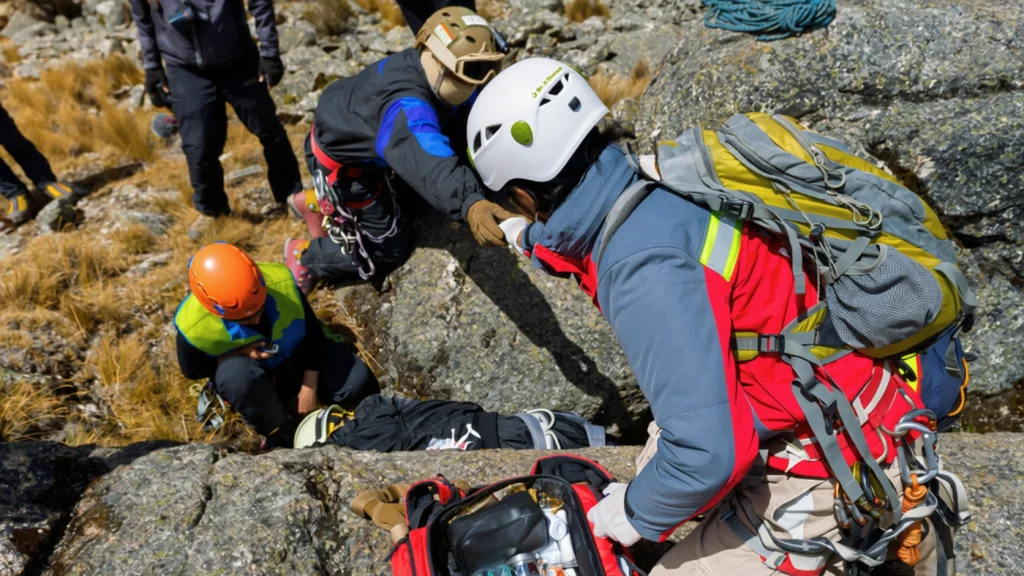
Technology can reduce some risks, but it doesn’t determine who is legally responsible after an accident. A climbing injury may involve a participant’s own actions, equipment issues, route conditions, another person’s conduct or the actions of property owners. The facts matter in each case.
If an accident involves someone else’s negligence, the injured person may need to examine who controlled the activity area, what warnings were provided, what safety procedures existed and what evidence remains.
So, it’s important to understand even the basics of liability in sports and recreational activities to know where your case stands.
How the Use of Apps Affects Personal Injury Claims
If an app was used before or during a climb, information from the app could become part of the evidence in some personal injury cases. Depending on the circumstances, relevant information might include:
- Route information: What route, difficulty, hazards, or warnings were displayed.
- Location data: Where the climber was when an incident occurred.
- Time records: When the person started, stopped, or reached particular points.
- Safety information: Warnings or instructions available through the application.
- User records: Information showing what features were accessed or relied upon.
This doesn’t mean an injured climber automatically becomes responsible for an accident simply because they used an app or made a different decision than the app suggested. The facts surrounding the incident still matter.
For example, if an app provided inaccurate route information, an investigation might examine whether that information contributed to the accident and who was responsible for providing it. If a climber ignored a clearly identified hazard, that fact could likewise become relevant when assessing the circumstances of the incident.
A personal injury lawyer in Calgary can review available digital records alongside other evidence, such as photographs, witness statements, medical records, incident reports, and information about the climbing location. This can help establish a clearer account of what happened and whether another party may have contributed to the injury.
Climbing technology adds another source of information to outdoor accident investigations. But it doesn’t replace the need to examine the physical conditions, human decisions, equipment, and conduct of any potentially responsible parties.
Injured during an outdoor activity? Our Sidhu Personal Injury Lawyers can review your circumstances, available evidence, and potential legal options. Contact our firm to discuss your situation.
Technology Can Support Safer Climbing Decisions
ThreeTopo shows how technology can give climbers better route information in places where a wrong turn can have serious consequences. Its combination of three-dimensional terrain, spatial annotations and one-handed interaction addresses a real problem identified by climbers and researchers.
Apps can’t remove every hazard. But they can give people better information at the right time. For climbers, that can mean checking a route before committing to a pitch, recognizing a hazard sooner, or avoiding an unnecessary detour.
If you’re already injured in an outdoor accident, the focus changes from prevention to recovery, evidence, and legal rights. Let experienced personal injury lawyers review the circumstances, explain available legal services, and help you assess options for pursuing compensation.
Frequently Asked Questions
Can outdated climbing route information be used as evidence in an Alberta injury claim?
Yes. An outdated route description, incorrect GPS coordinate or missing hazard warning could become relevant evidence if it influenced the climber’s decisions before an accident. Preserve screenshots, downloaded maps, route descriptions and timestamps showing the information available at the time. These records can help establish what the climber relied on, although additional evidence is needed to assess negligence and causation.
How can a personal injury lawyer assess a climbing accident involving app data?
A personal injury lawyer in Alberta, such as the Sidhu lawyers, can use app data as a key piece of evidence when investigating a climbing accident by reviewing GPS history, route logs, and timestamps alongside photographs, witness statements, and medical records. This helps reconstruct the sequence of events and identify whether negligence played a role, such as a third party providing faulty route data. Alberta’s Occupiers’ Liability Act may also apply depending on where the accident occurred.
What happens if a climbing app deletes your accident records?
Some climbing apps automatically overwrite location history or remove data when users delete an activity or close an account. If the records are no longer available, recovering them can be difficult. After an accident, download your activity history, save the original photos and check whether the app offers a data export feature. Keep the original files whenever possible.